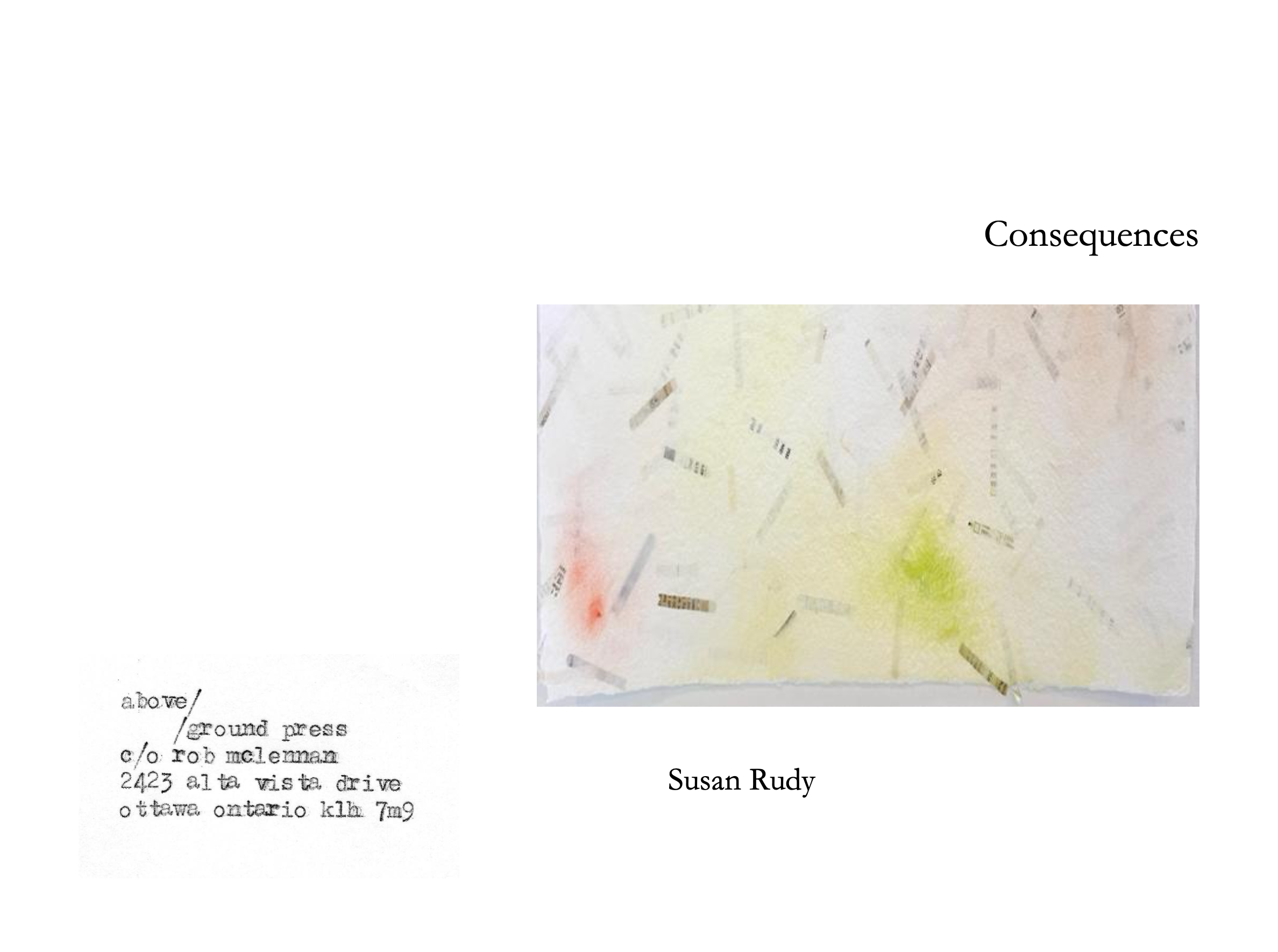
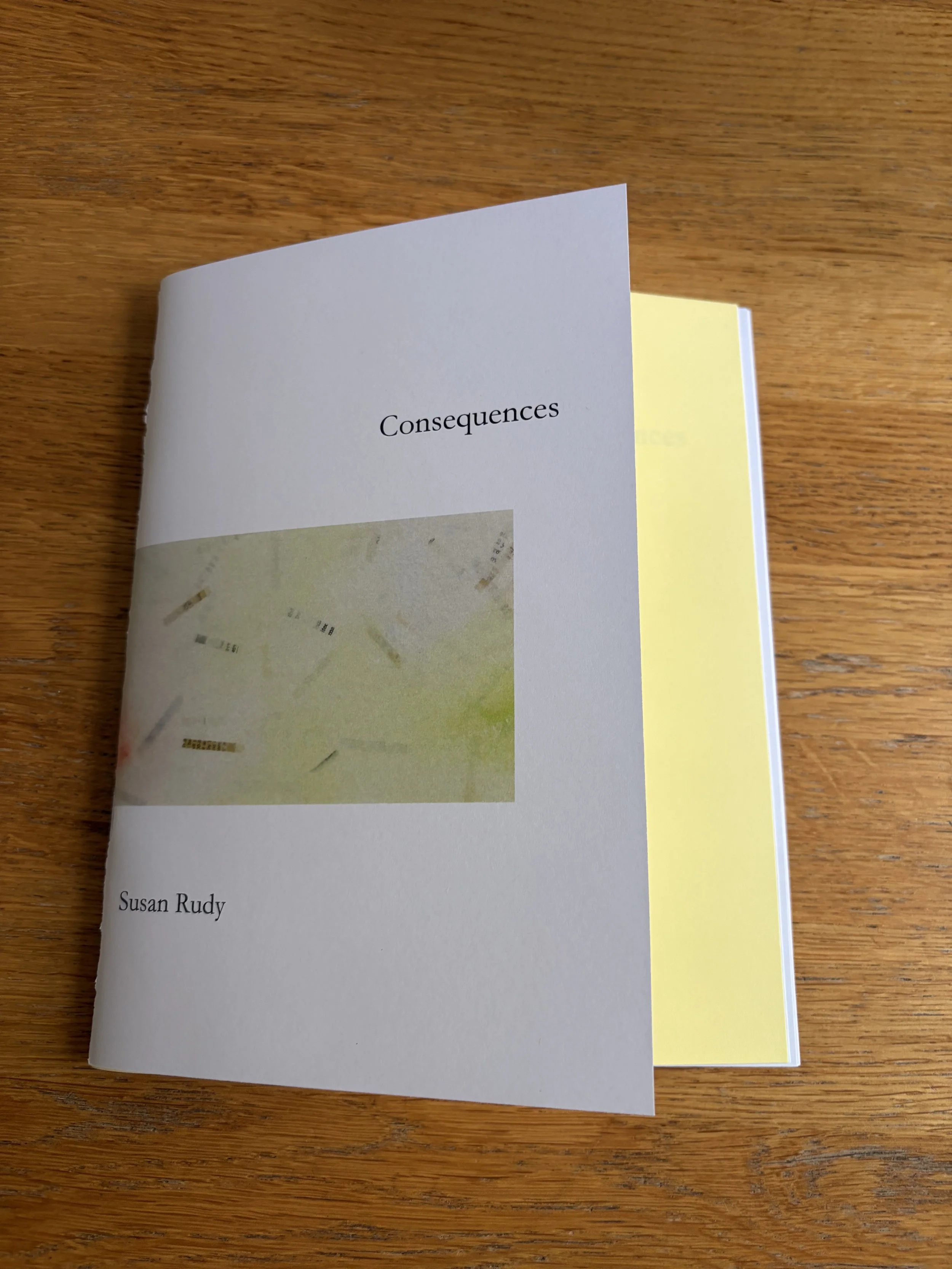
Consequences
Sections T - V of Hand Over
Available online in the UK at Housmans Bookshop
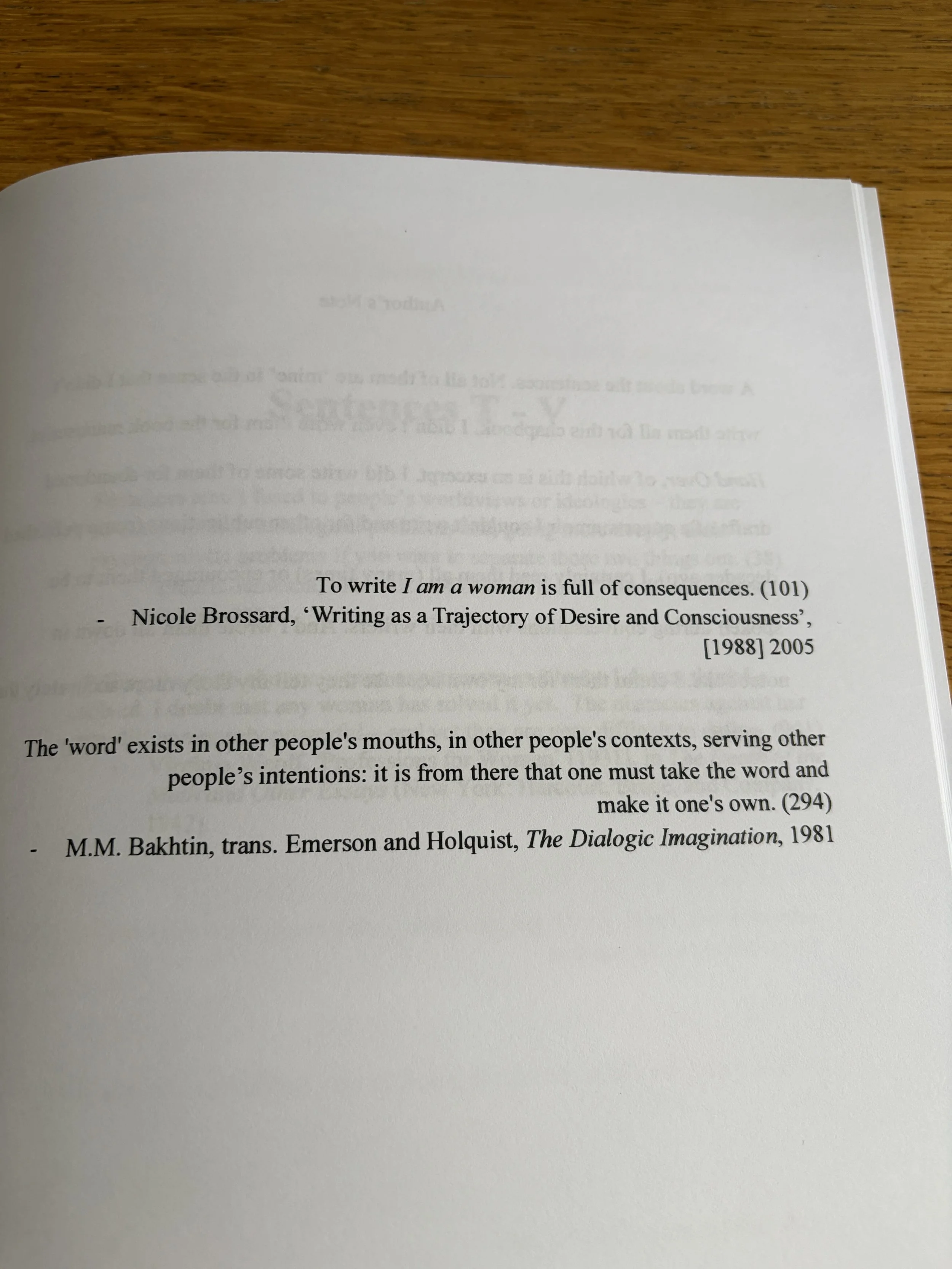
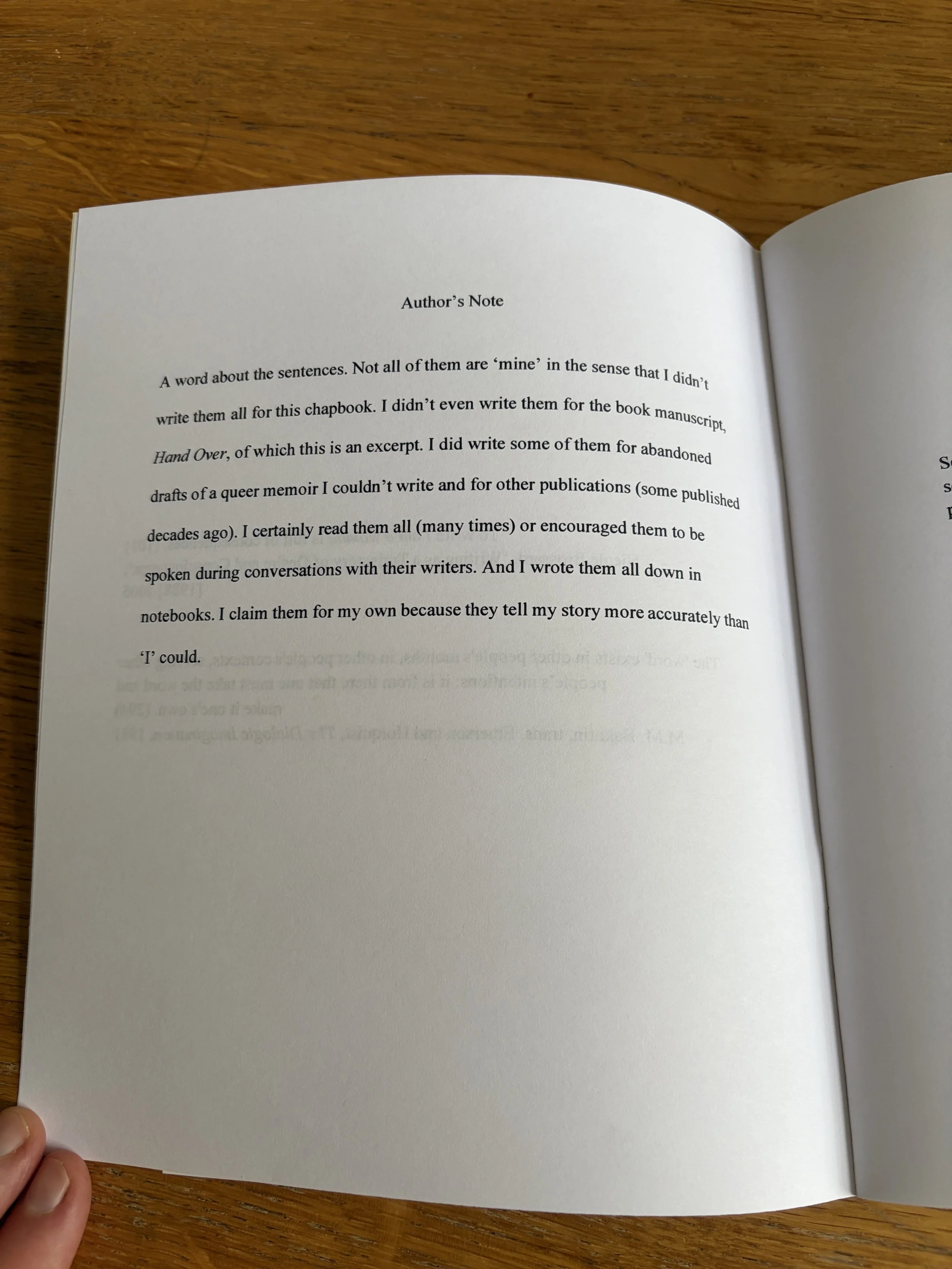
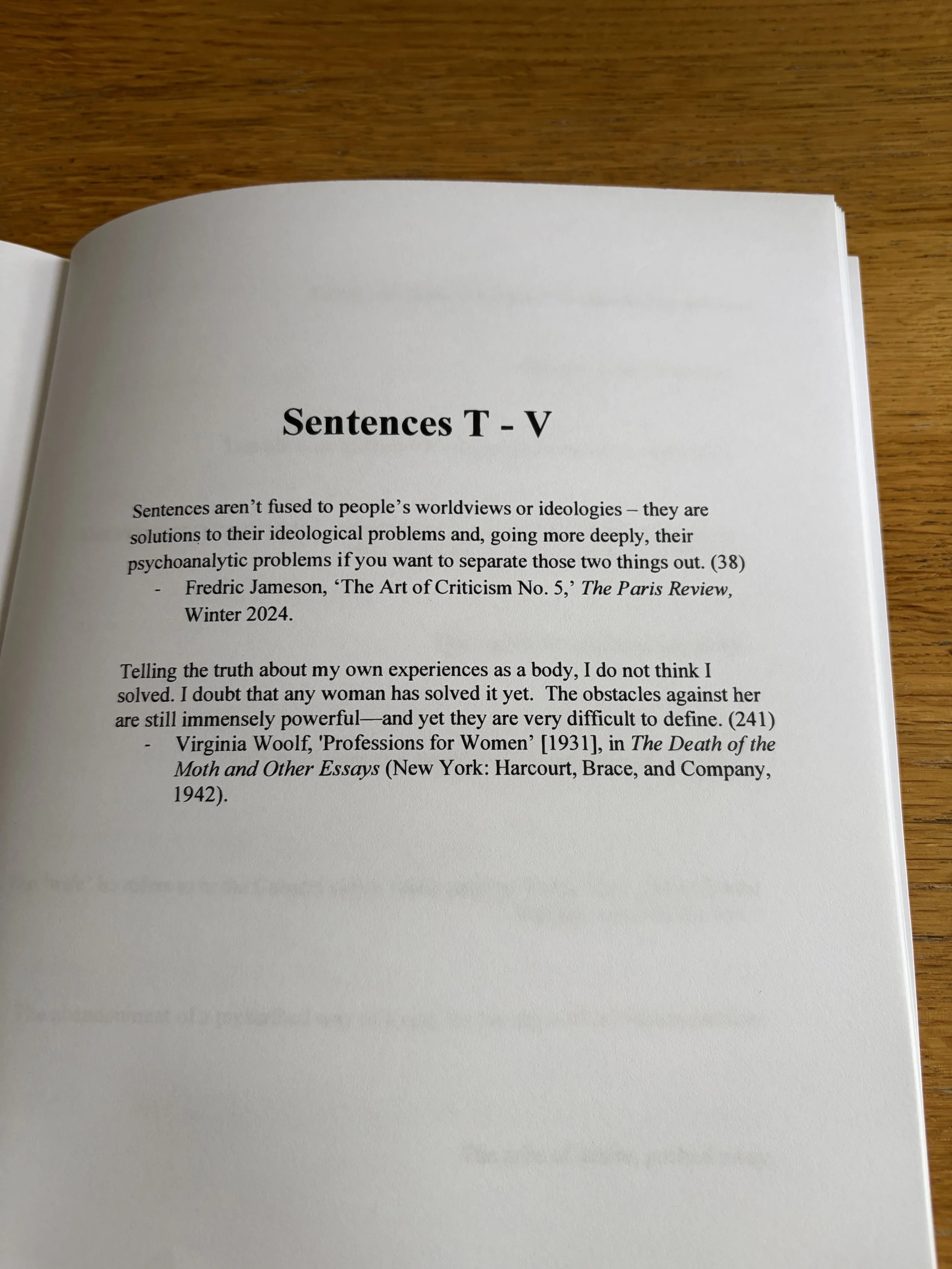
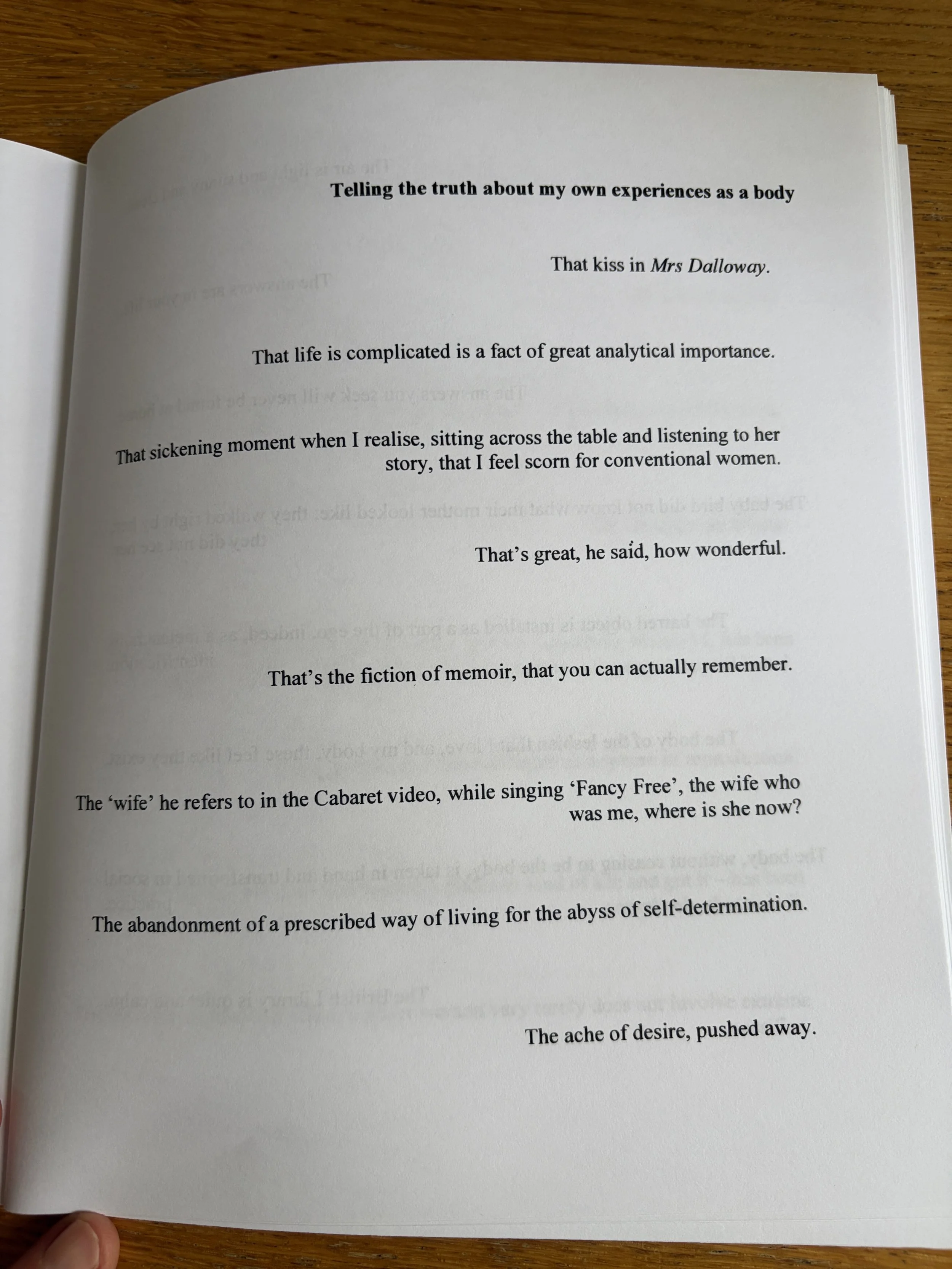
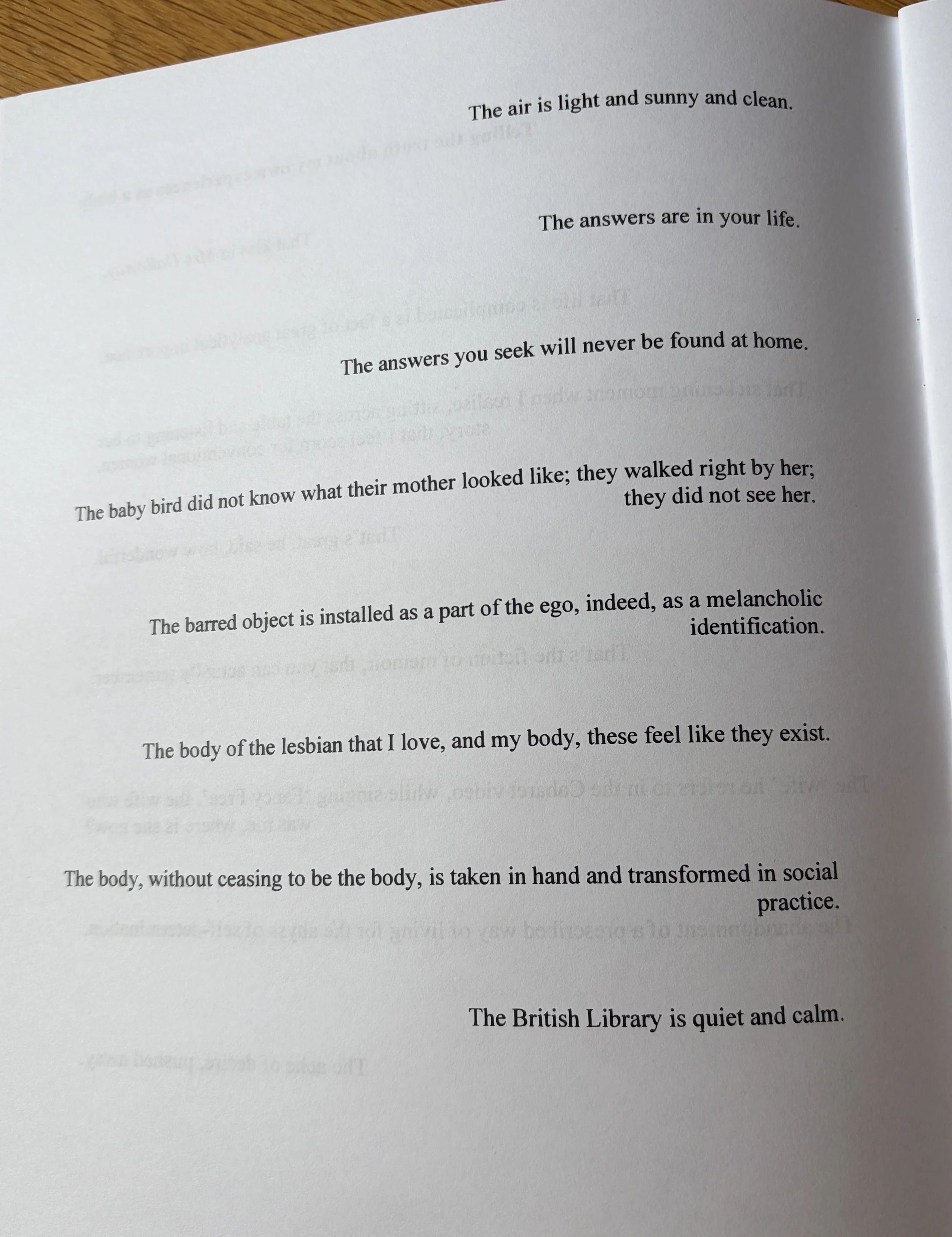
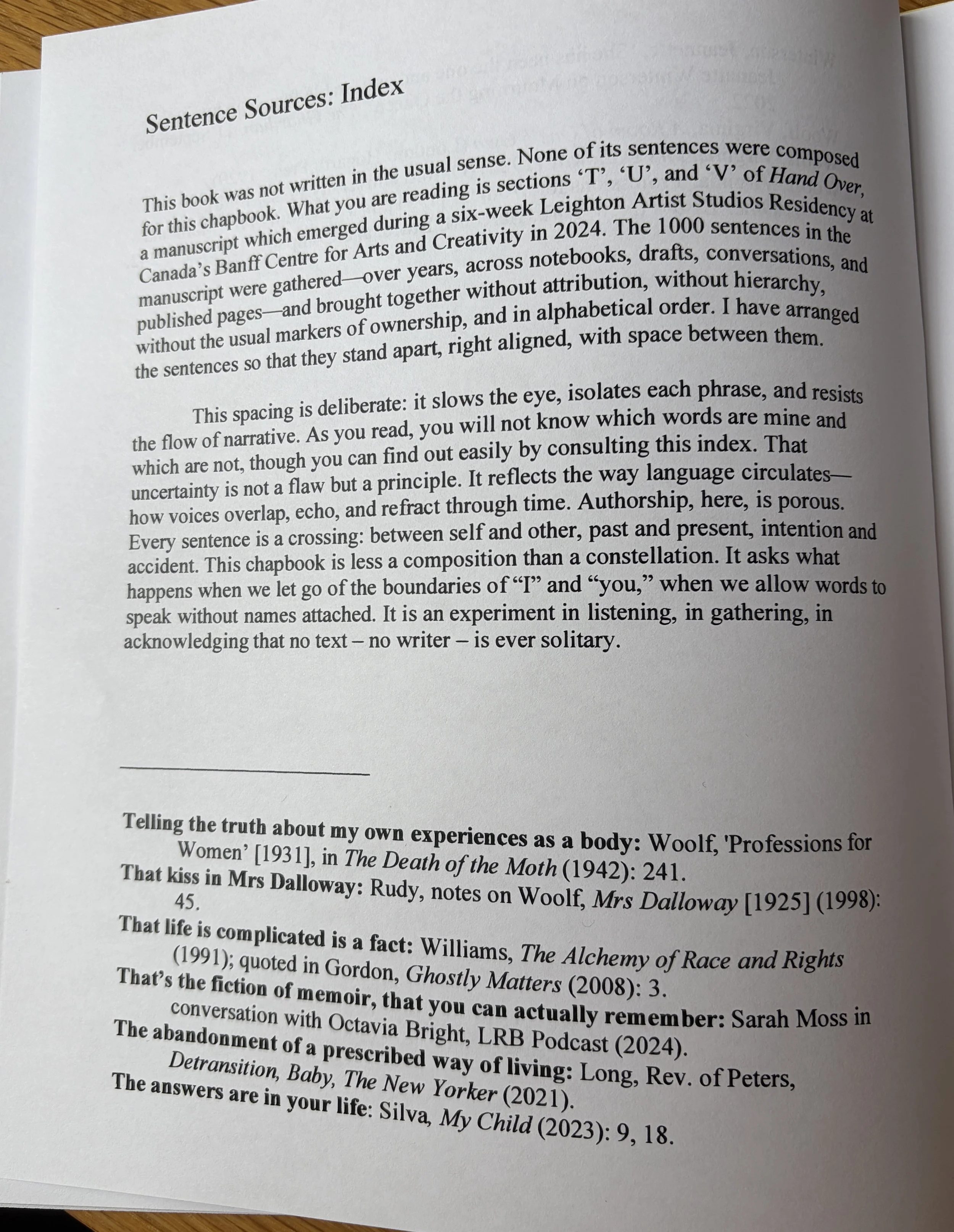
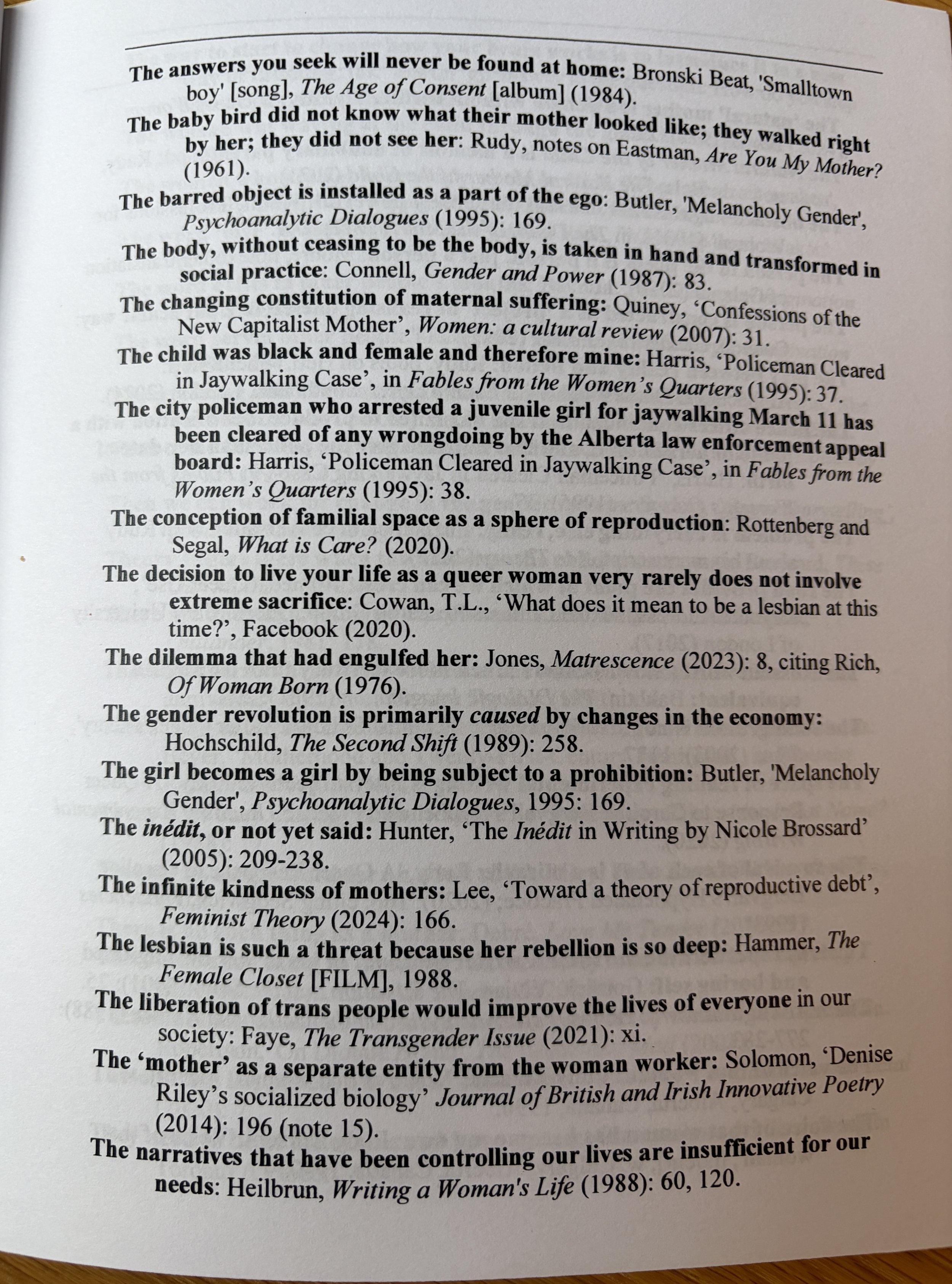
This book was not written in the usual sense. None of its sentences were composed for this chapbook. What you are reading is sections ‘T’, ‘U’, and ‘V’ of Hand Over, a manuscript which emerged during a six-week Leighton Artist Studios Residency at Canada’s Banff Centre for Arts and Creativity in 2024. The 1000 sentences in the manuscript were gathered—over years, across notebooks, drafts, conversations, and published pages—and brought together without attribution, without hierarchy, without the usual markers of ownership, and in alphabetical order. I have arranged the sentences so that they stand apart, right aligned, with space between them.
This spacing is deliberate: it slows the eye, isolates each phrase, and resists the flow of narrative. As you read, you will not know which words are mine and which are not, though you can find out easily by consulting this index. That uncertainty is not a flaw but a principle. It reflects the way language circulates—how voices overlap, echo, and refract through time. Authorship, here, is porous. Every sentence is a crossing: between self and other, past and present, intention and accident. This chapbook is less a composition than a constellation. It asks what happens when we let go of the boundaries of “I” and “you,” when we allow words to speak without names attached. It is an experiment in listening, in gathering, in acknowledging that no text – no writer – is ever solitary.
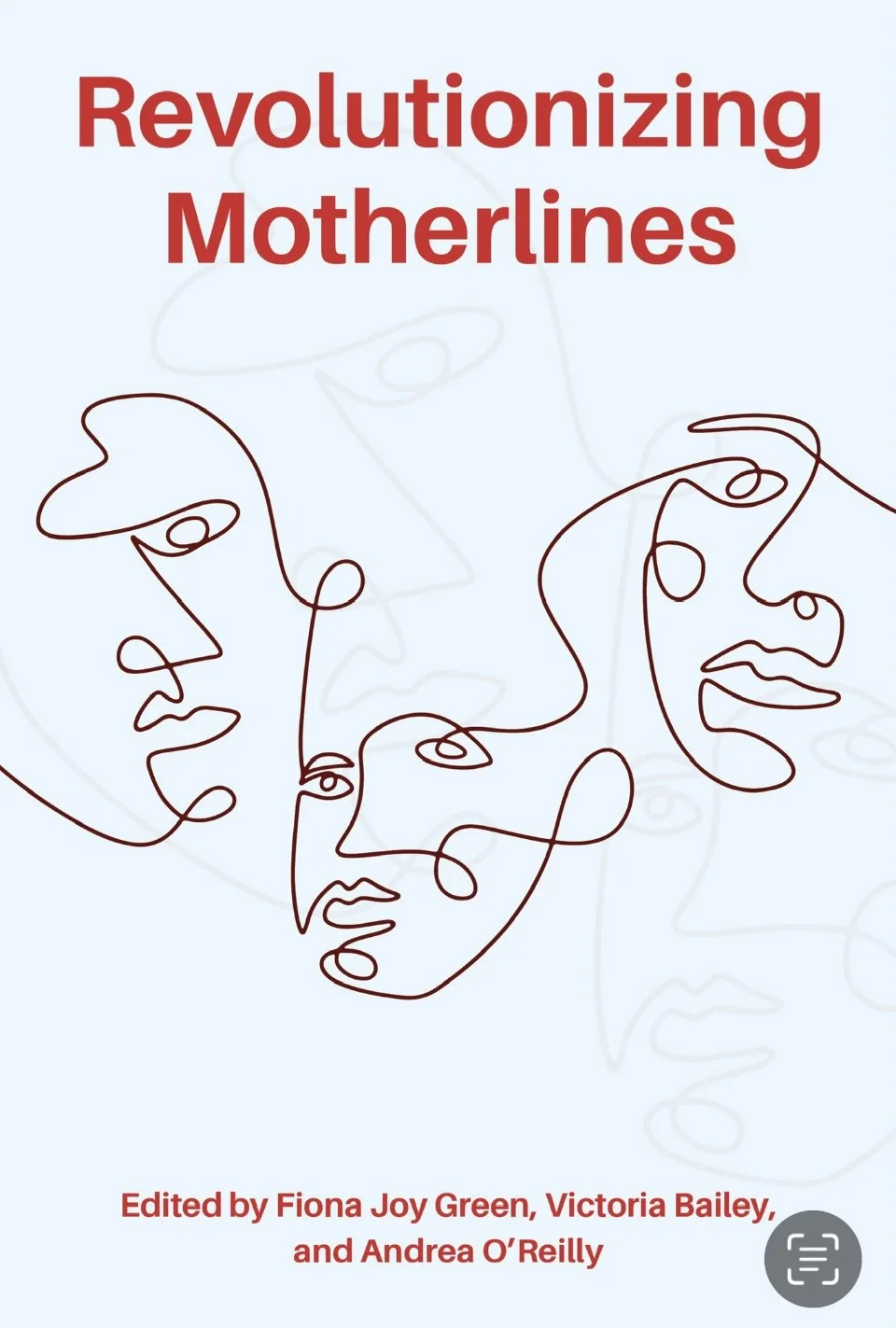
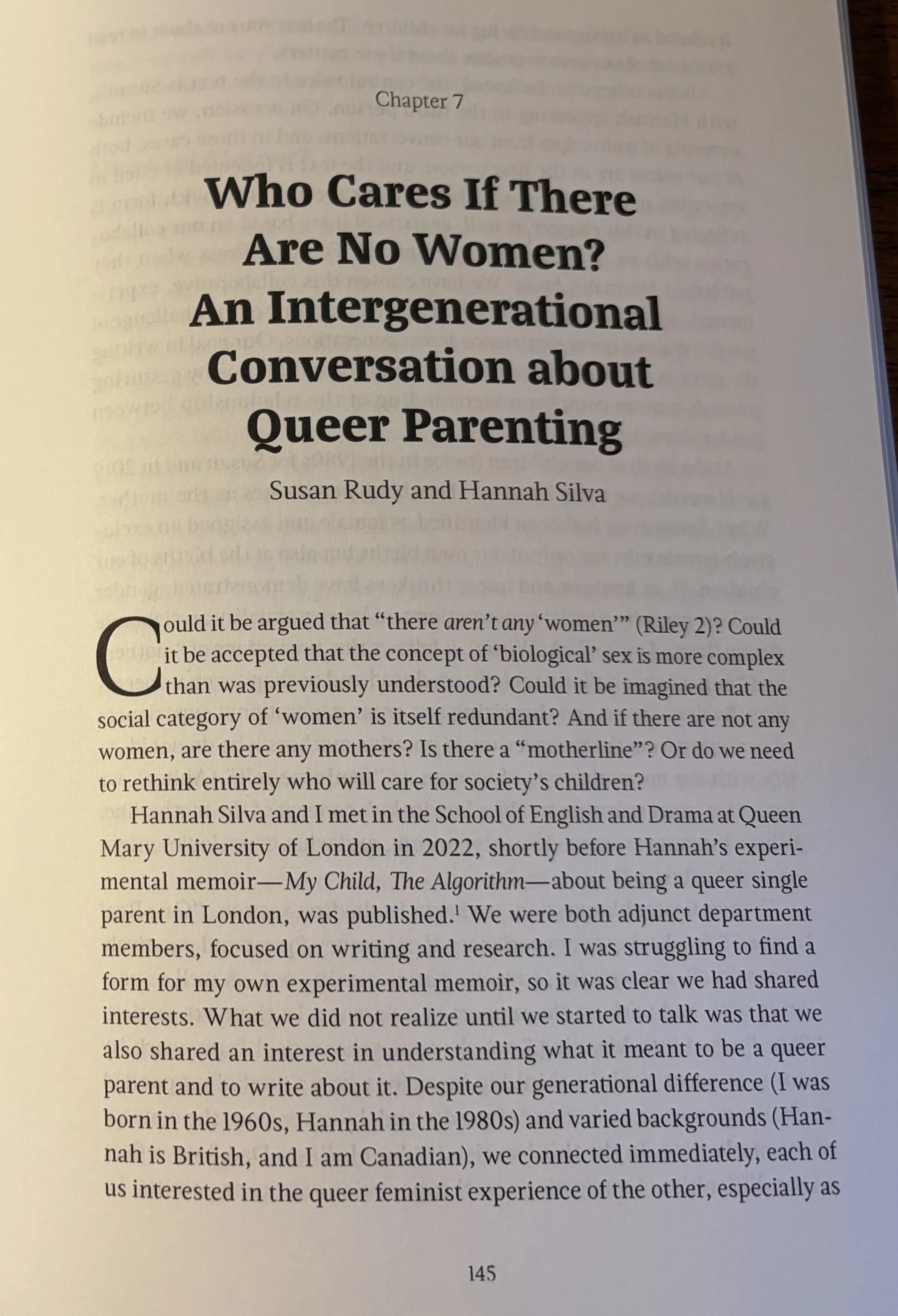
Who cares if there are no women? An Intergenerational Conversation about Queer Parenting
In 'Who Cares If There Are No Women? An Intergenerational Conversation about Queer Parenting', Susan Rudy and Hannah Silva draw upon and theorize their cross-generational experiences of parenting. In doing so, they ask whose interests are served by the notion of a motherline. Written from the perspective of putative mothers who do not identify with the normative role of women as 'feminine self', they argue that queer existence troubles the concept of the motherline and call for a more complex understanding of the relationship betweeen gender, care, and parenting, which revolutionizes understandings and experiences of the motherline.
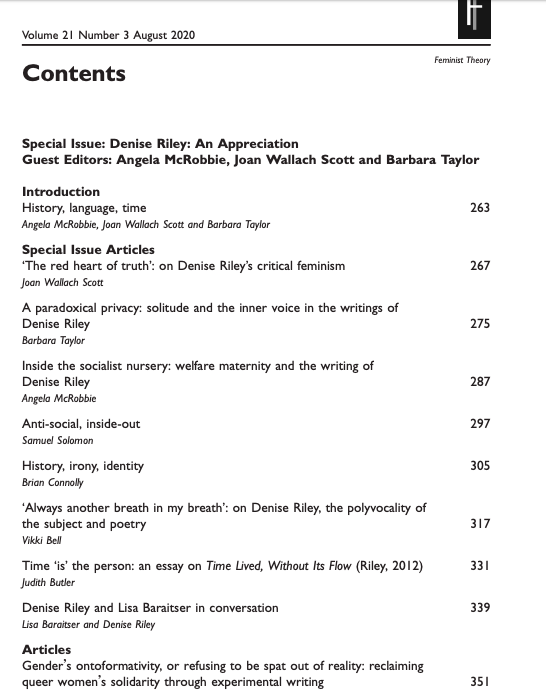
Appearing alongside essays on the eminent feminist theorist and poet Denise Riley, this essay appeared in Feminist Theory (21.3) in 2020.

Co-authored with the eminent feminist theorist Clare Hemmings, this interview appeared in the European Journal of Women’s Studies in 2019.
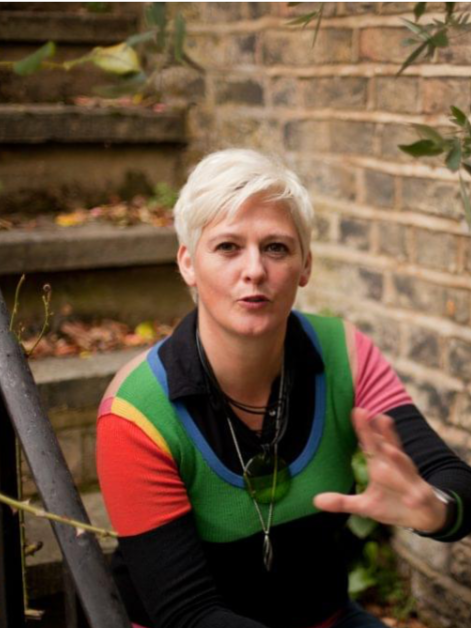
Interview with Susan Rudy
Appearing originally in 2010, Susan Rudy’s interview with Caroline Bergvall was republished by Amsterdam University Press in 2023 in Caroline Bergvall’s Medievalist Poetics: Migratory Texts and Transhistorical Methods, edited by Joshua Davies and Caroline Bergvall.
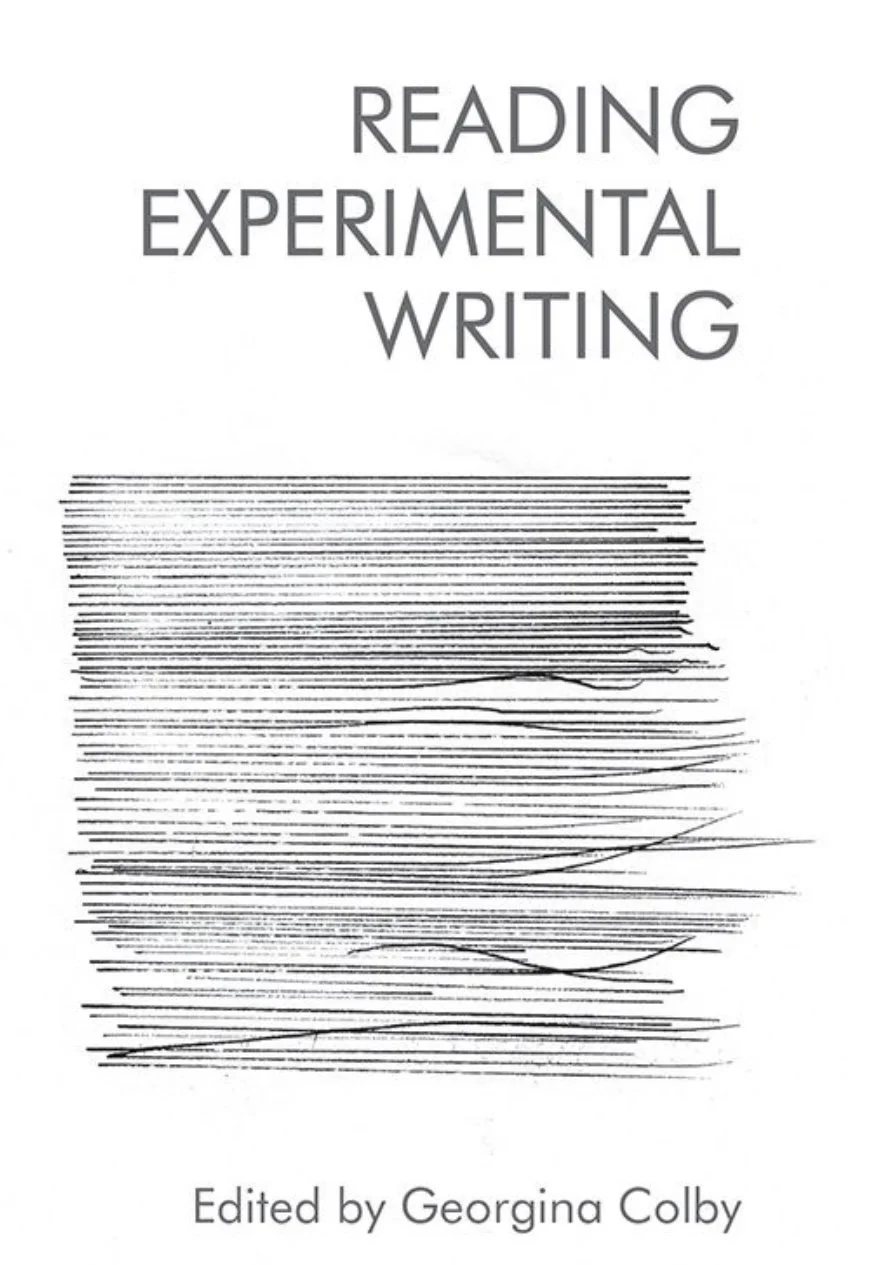
A Queer Response to Caroline Bergvall’s Hyphenated Practice: Toward an Interdependent Model of Reading
Appearing with Edinburgh University Press in 2020, is Susan Rudy’s queer response to Bergvall’s longtime practice of hyphenation.